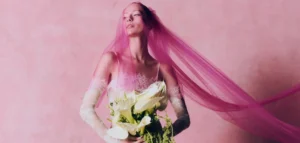
AMIRI Fall 2026: California Mythology Reimagined
 WNO1Model
4 min read
WNO1Model
4 min read

The collection looked back to the creative culture of Laurel Canyon in the late twentieth century, blending nostalgia, craftsmanship, and effortless glamour into a wardrobe that felt both intimate and cinematic.
Amiri’s work has long been rooted in the mythology of California—particularly the intersection of rock music, youth culture, and luxury. For Winter 2026, he refined that narrative further, presenting a collection that explored what American luxury looks like when filtered through decades of artistic influence and lived-in authenticity.
The Spirit of Laurel Canyon
The emotional centre of the collection lies in Laurel Canyon, a hillside neighbourhood in Los Angeles once synonymous with musicians, actors, and artists who shaped the sound and spirit of the 1970s. Rather than referencing this history literally, Amiri captured the mood of that creative environment: relaxed, expressive, and quietly decadent.
The runway itself evoked a bohemian living room—layered rugs, vintage armchairs, bookshelves, and soft lighting. The setting felt less like a fashion show and more like a gathering of musicians after a late-night recording session. This atmosphere reinforced the collection’s central idea: clothing as part of a creative lifestyle rather than simply a display of fashion.
Relaxed Tailoring and Californian Ease
One of the most notable developments in the Winter 2026 collection was Amiri’s continued evolution of tailoring. Traditional suits appeared softened and relaxed, reflecting the laid-back sensibility of the West Coast.
Blazers were worn open over simple tees and knit Henleys. Trousers draped loosely, often paired with distressed denim or Western boots. The silhouettes maintained elegance while rejecting stiffness—capturing the casual confidence that defines Los Angeles style.
This balance between polish and ease has become one of Amiri’s signatures. In this collection, tailoring was no longer just formalwear; it became part of an everyday wardrobe for artists, musicians, and creatives moving effortlessly between studio, stage, and city.
Rock-and-Roll Heritage
Music has always been integral to Amiri’s design language, and Winter 2026 continued that tradition. The collection carried subtle echoes of vintage rock wardrobes—embroidered jackets, velvet accents, and textured leather pieces that hinted at stage costumes without becoming theatrical.
Denim, one of the brand’s defining materials, appeared in multiple interpretations: distressed washes, patchwork constructions, and flocked velvet finishes. These treatments added depth and individuality to each piece, suggesting garments that have been worn, loved, and lived in.


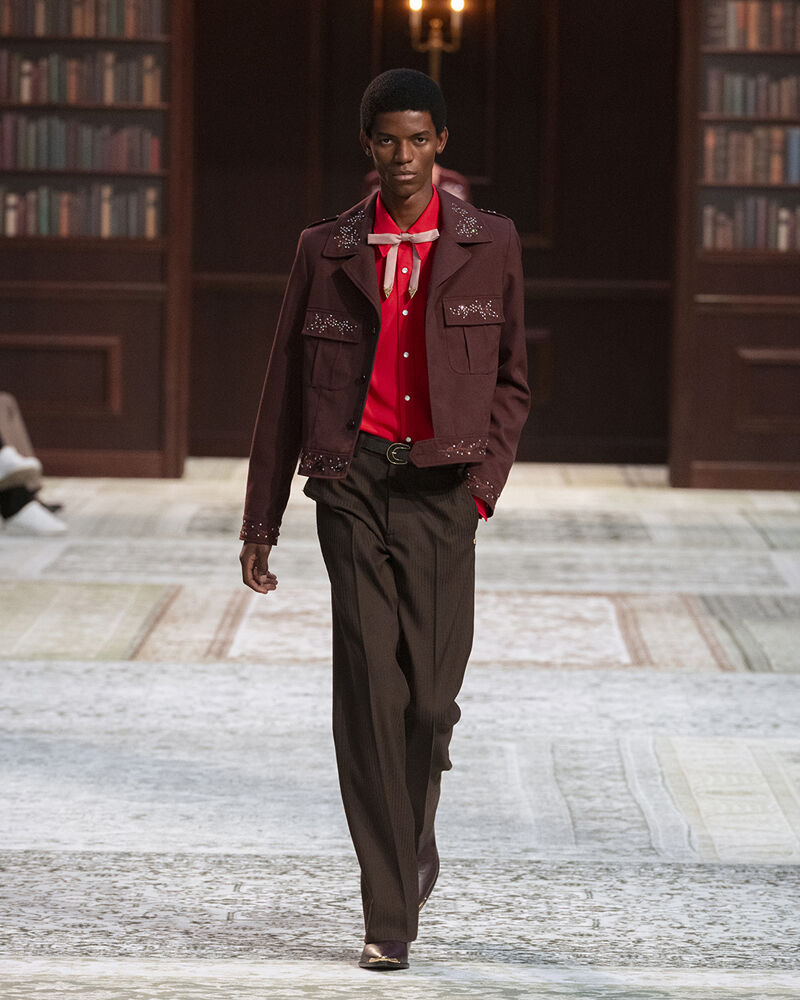


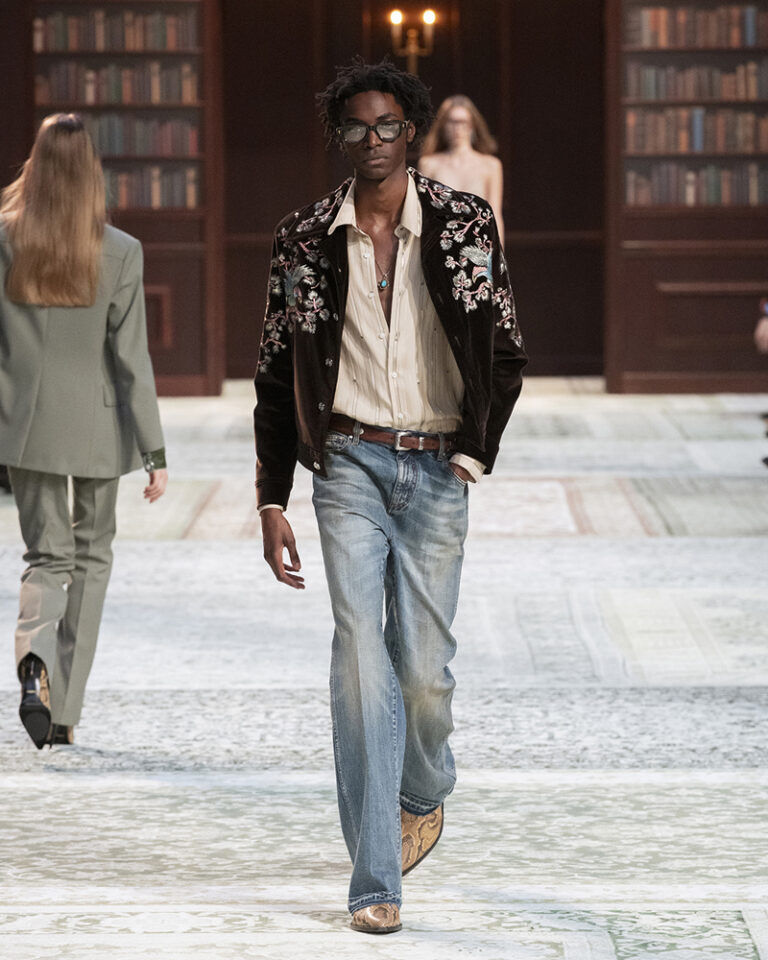

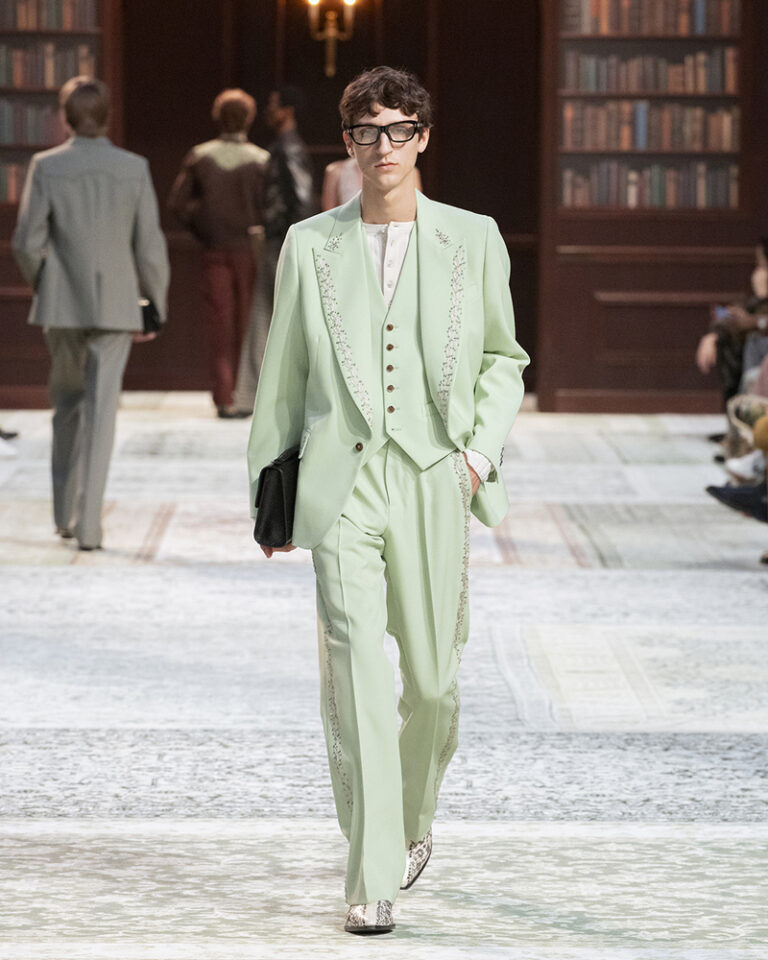
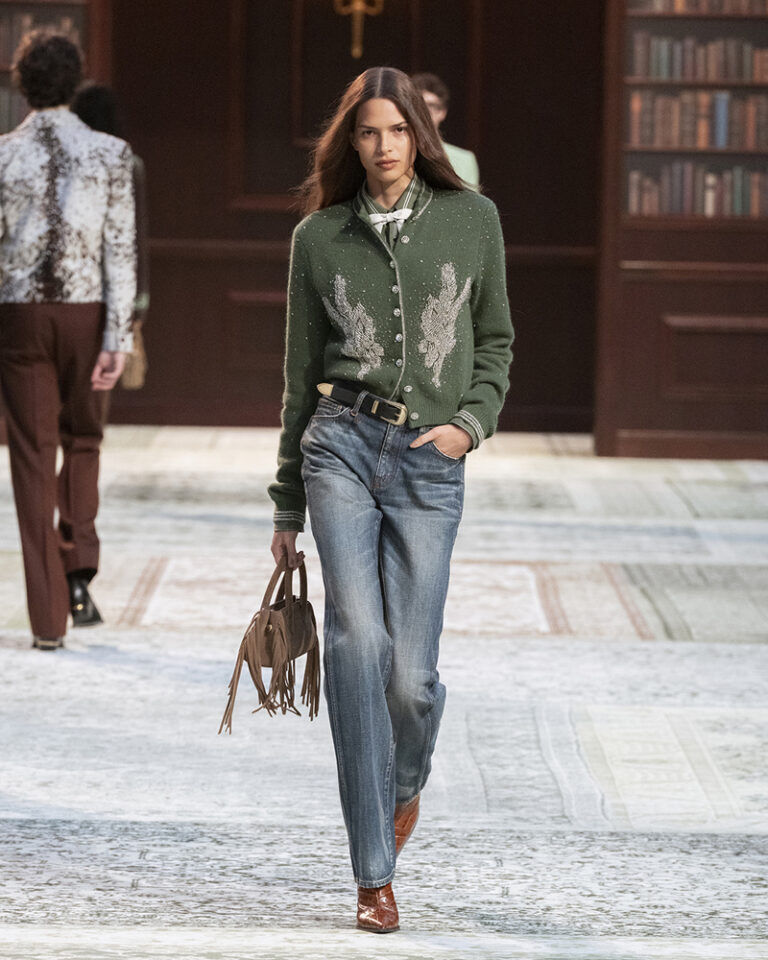


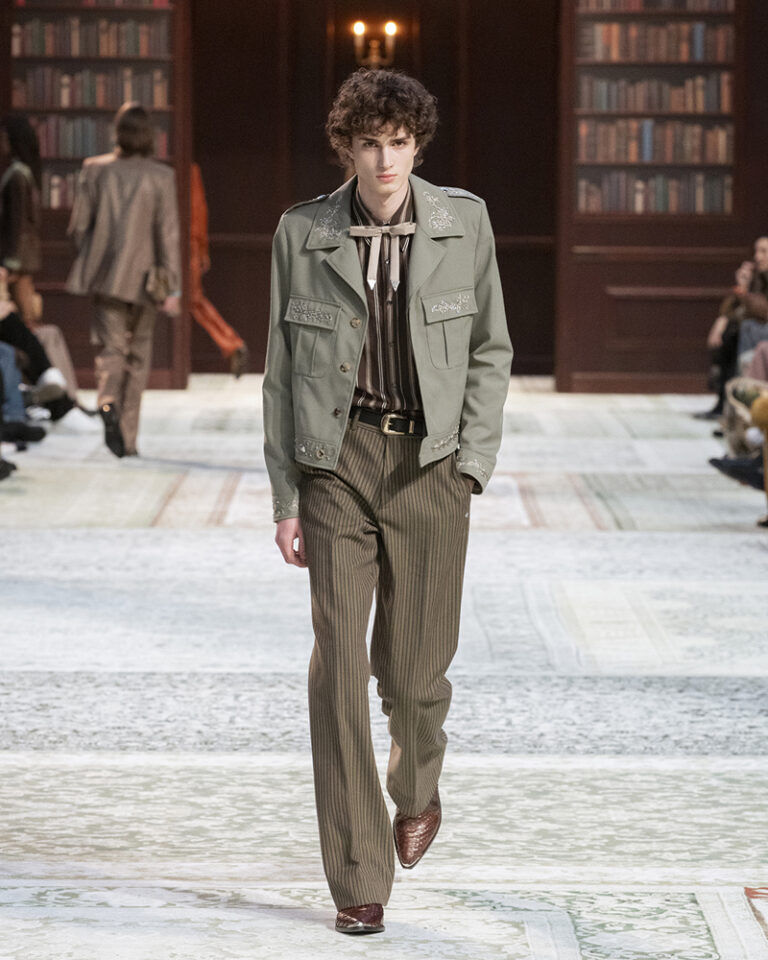


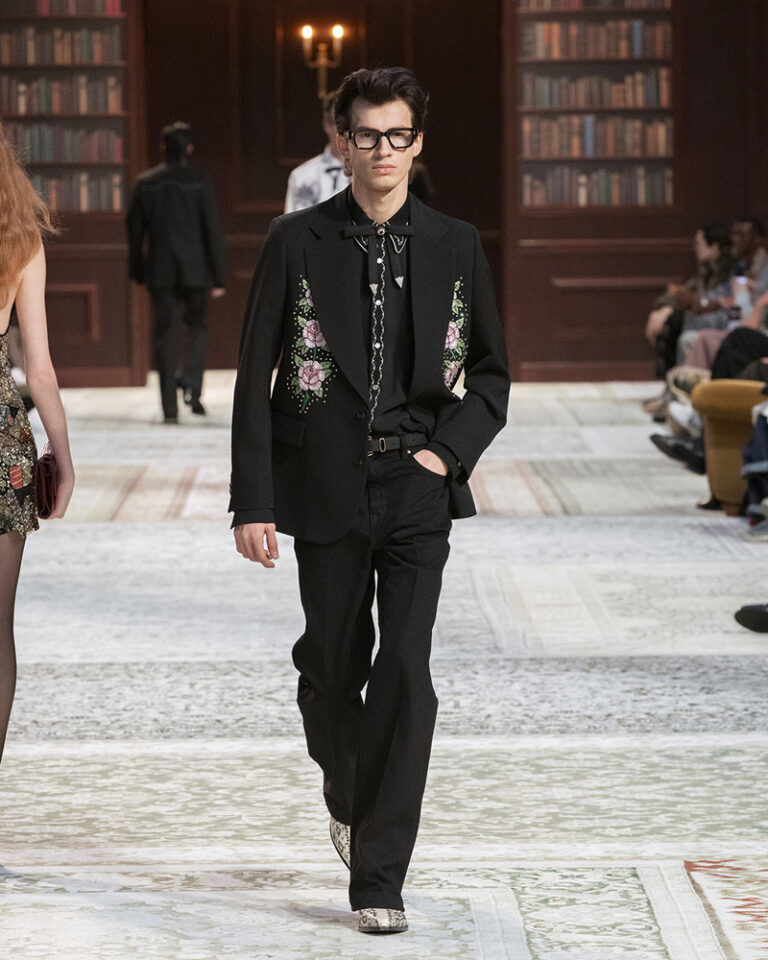
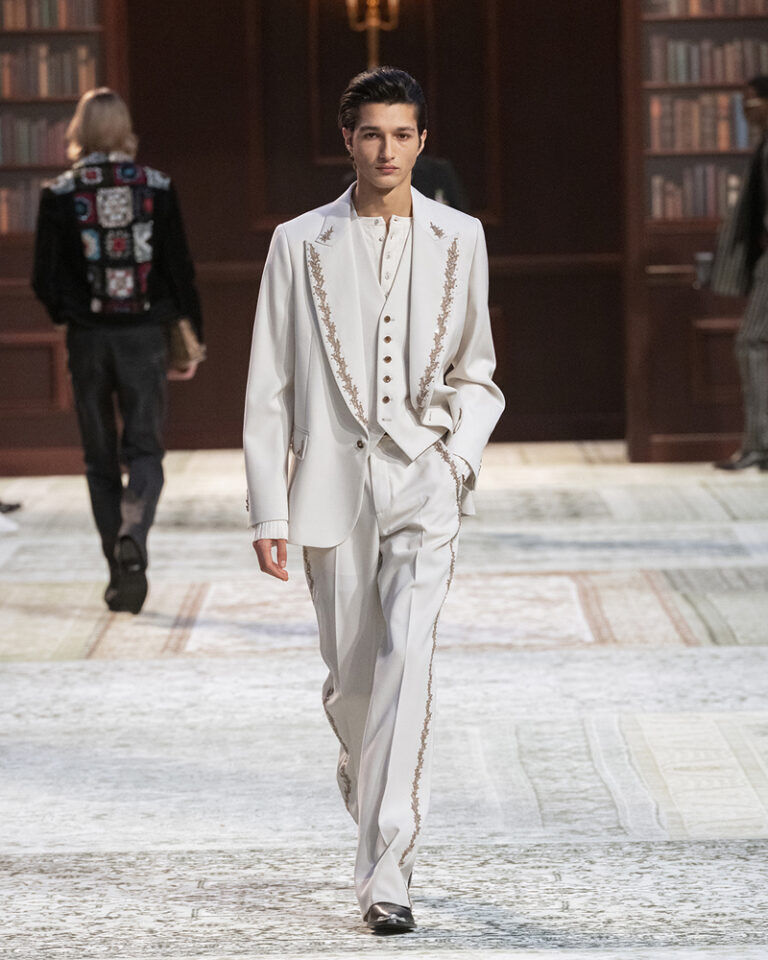


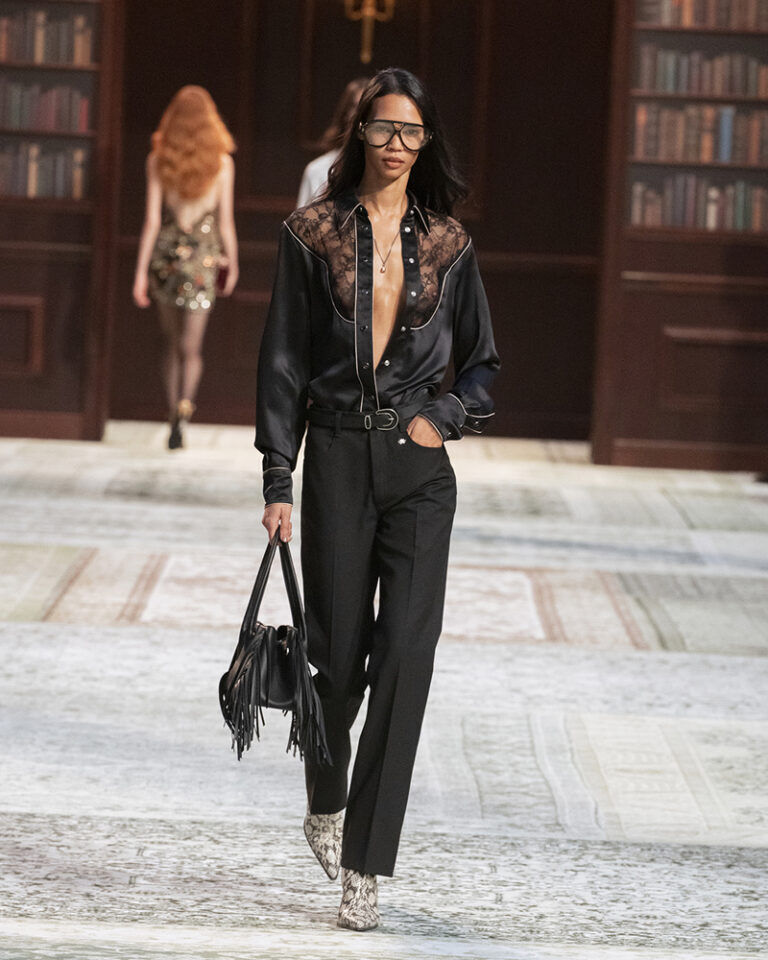
Footwear also leaned heavily into rock heritage. Western boots with metallic toe caps and worn finishes anchored many looks, reinforcing the collection’s blend of Americana and luxury craftsmanship.
Craftsmanship as Detail
While the collection felt relaxed in spirit, the level of craftsmanship remained meticulous. Embroidery, beadwork, and metallic embellishments appeared throughout the lineup, often used sparingly so that the garments maintained an understated elegance.
Rather than overwhelming the designs, these details functioned as subtle punctuation marks. A suit might feature delicate embellishment along the lapel, while a knit sweater carried intricate motifs only visible at close range. This approach allowed the clothing to feel personal and refined rather than overtly decorative.
Textures played an equally important role. Satin, leather, knitwear, and velvet were layered together to create visual depth. The colour palette—deep burgundy, chocolate brown, forest green, and flashes of cobalt blue—enhanced the nostalgic atmosphere of the collection.
Fluidity and Modern Luxury
Another defining element of the Winter 2026 show was its fluid approach to gender and styling. Many silhouettes moved easily between menswear and womenswear, reflecting a broader shift within contemporary fashion toward more inclusive and adaptable wardrobes.
Relaxed suits, embroidered knits, and statement outerwear appeared across both sides of the runway. Eveningwear mirrored this shared aesthetic, with embellished tuxedos and satin pieces that felt equally suited to multiple interpretations of modern elegance.
In this sense, Amiri’s vision of American luxury is increasingly democratic—less about rigid categories and more about individual expression.
Los Angeles in Paris
Although the show took place in Paris, the spirit of Los Angeles was unmistakable. Amiri has spent years refining a design language that bridges the two cities: California’s relaxed creativity paired with the craftsmanship and prestige associated with European fashion houses.
Fall 2026 exemplified this balance. The garments carried the warmth and authenticity of West Coast culture, while the presentation itself reflected the precision and storytelling of the Paris runway.
The result was a collection that felt deeply personal to Amiri while still resonating globally.
A Continued Evolution
With the Fall/Winter 2026 collection, AMIRI continues to mature as a luxury house. The brand’s early reputation for distressed denim and rock-inspired streetwear has evolved into a broader vision of modern American elegance.
Yet the essence remains the same: a celebration of music, culture, and individuality rooted in the mythology of Los Angeles.
By revisiting Laurel Canyon and its legacy of creative freedom, Mike Amiri reminds us that fashion—like music—can capture the spirit of a time and place while still moving forward.
And for Fall 2026, that spirit is unmistakably Californian.
About The Author